
Vessel-tracking analyst Matt Smith of Kpler is warning that the Iran-war shock to crude flows is now showing up directly in the weekly tanker data for Asia's largest refining nations — and that the Saudi East-West pipeline, the only meaningful workaround, is approaching its physical ceiling.
"You can look at South Korea, you can look at Thailand, you can look at Taiwan — and that you see on the weekly data, those flows are just drying up from the Middle East," Smith told CNBC Television. The point is not that the conflict has shut Hormuz traffic to zero. It is that, with so few new ships loading, vessels still arriving in Asian ports were already at sea before the disruption — and there is nothing behind them.
Smith was equally blunt on the Strait of Hormuz itself. "Answer is no, Brian," he said when asked whether traffic was reopening. "While we did see an increase in traffic going through on Saturday, that was an anomaly as opposed to the start of a new trend. And so we're just back to a handful or less" of vessels per day. Of those, Smith said, "the majority of it remains to be Iranian crews and so the unsanctioned tankers' shadow fleet that are going through there. There is the odd one" that may carry humanitarian cargoes — though the practical effect is that virtually no fresh non-Iranian crude is leaving the Gulf via Hormuz.
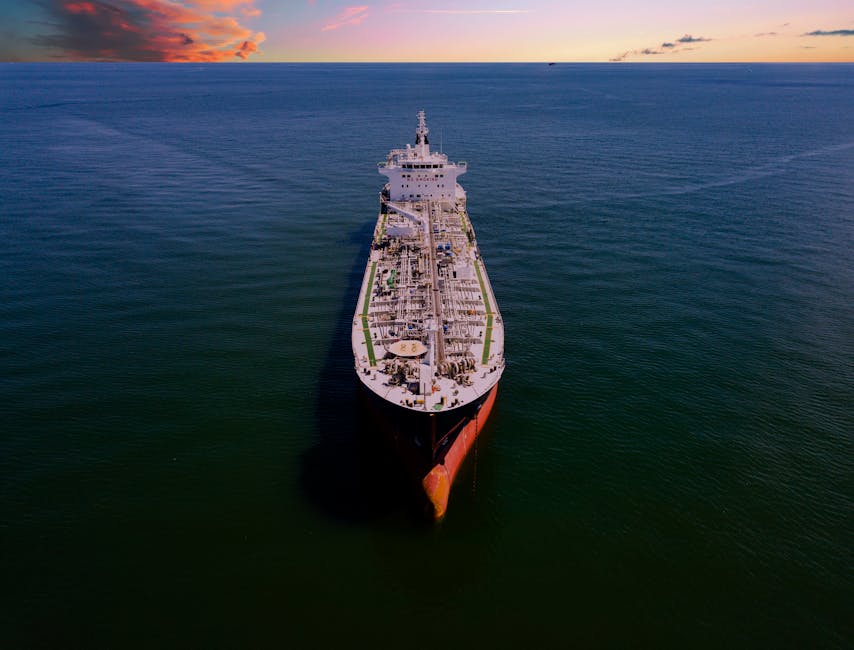
The supposed escape valve is the Saudi East-West pipeline, which can move crude across the Arabian peninsula to the Red Sea port of Yanbu, bypassing Hormuz. Smith's read on capacity is that the workaround is essentially full. "The East-West pipeline there is getting up to capacity, we hear, but in terms of what can be loaded out of Yanbu in the Red Sea, we're maxing out — to your point — around 4 and a half million barrels a day," he said. He added that the flow direction has flipped: oil that historically headed north to Egypt is now being diverted south to Asia, where the shortfall is worst.
That re-routing brings its own geopolitical risk. The 4.5 million-barrel-per-day Yanbu workaround still has to thread the Bab el-Mandeb chokepoint at the southern end of the Red Sea — exactly the corridor Houthi forces have repeatedly targeted with anti-ship fire over the past two years. Smith warned that any escalation between US, Israeli or Iranian forces could trigger a Houthi response that closes Bab el-Mandeb for tanker traffic, eliminating the only material alternative to Hormuz.
The downstream implication is that Asian refiners — particularly the heavily-dependent South Korean, Thai and Taiwanese complexes — are running down working inventories with no clean restock visible in tanker data. Smith's warning ties directly into the commercial signal already showing up in markets, where Asian refining margins have widened sharply and product premiums for jet fuel and diesel have spiked.
The political question is how long the freight squeeze can persist before it becomes a domestic-fuel crisis on multiple continents. Smith's answer was the most striking line of the segment when asked about the West Coast of the United States: "Weeks — and it's going to be jet fuel first." The tanker data, in other words, is no longer just a leading indicator. It is starting to call the shots.