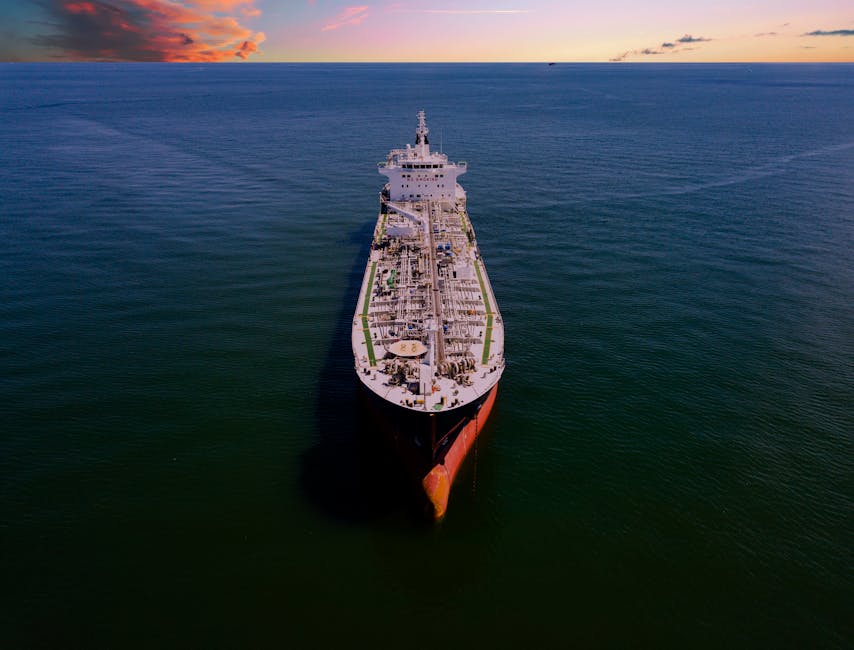
Kpler's vessel-tracking analyst Matt Smith says the Red Sea — and specifically the Bab el-Mandeb chokepoint at its southern entrance — has quietly become the single most fragile node in global crude flows, with around 4 million barrels per day routing through a corridor that Houthi forces in Yemen have already proven willing to attack.
The arithmetic stems from the sequence of disruptions caused by the Iran-war shock. With the Strait of Hormuz reduced to a handful or less of non-Iranian tanker passages per day, according to Smith's CNBC Television briefing, the only meaningful alternative for Saudi crude bound for Asia is the East-West pipeline that empties at the Red Sea port of Yanbu. That route is now near maximum throughput — "we're maxing out around 4 and a half million barrels a day" out of Yanbu, Smith said — but every barrel loaded there still has to pass through Bab el-Mandeb to reach Asian refineries.
"What has to happen is they have to pass Bab el-Mandeb here," Smith said. "And that's where the Houthis in the last few years have been firing pop shots at tankers going through. So the concern is" that any escalation in the Iran conflict could trigger a Houthi retaliation that cuts Red Sea tanker flows entirely.

The vulnerability is not theoretical. Houthi forces operating from Yemen have repeatedly targeted commercial vessels in the southern Red Sea since 2023, using a combination of cruise missiles, drones, and small-boat raids to force long detours around the Cape of Good Hope. What is different now is that there is no longer a Hormuz alternative running in parallel — the Yanbu pipeline-Red Sea route is no longer a backup, but the primary lifeline for Asian crude supply.
Smith's read on the human geography of the disruption is grim. With Hormuz and the Red Sea simultaneously squeezed, the spillover lands hardest on long-haul Asia-bound flows. South Korean, Thai and Taiwanese refiners have already seen Middle Eastern arrivals just drying up in weekly tanker data — and the next leg of the squeeze, on Smith's framework, would be a confirmed Houthi strike that cleared Bab el-Mandeb of insurance-acceptable tanker traffic.
The downstream implications for fuel prices are severe. Asia's refining complexes supply jet fuel and diesel to North America's West Coast, among other markets. Smith warned that California is already only weeks away from a jet-fuel shortage based on current shipping data — a forecast made before any further Bab el-Mandeb disruption. A Houthi escalation that took 4 million barrels per day off the seaborne grid would hit refined-product markets globally, and could push Brent crude through prior 2026 highs almost immediately.
The policy quandary for Washington is that any decisive military move against Iran almost guarantees a Houthi escalation in the Red Sea — and that escalation would, on Kpler's data, vaporise the very seaborne workaround US allies in Asia are currently relying on. The result is a rare moment in oil markets where political escalation and supply security point in opposite directions, with the Bab el-Mandeb chokepoint sitting as the pivot point of both.