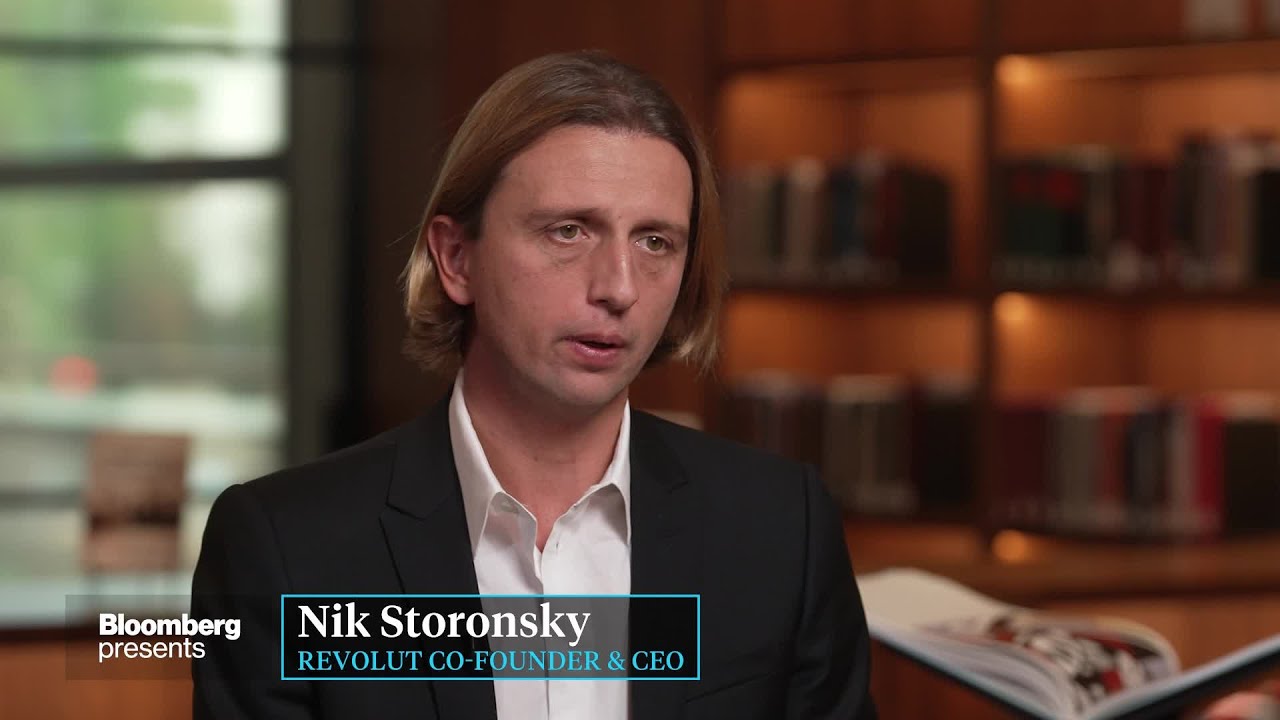
Revolut founder Nikolay Storonsky has offered the clearest timeline yet for the digital bank's long-anticipated stock market debut, telling private-equity billionaire David Rubenstein that the London-headquartered fintech is "probably" two years away from being ready for an initial public offering.
Speaking on Rubenstein's interview show, Storonsky was pressed on reports valuing Revolut at roughly $75 billion — a figure that would make the company one of the most valuable private fintech businesses in the world.
"The way I think about it, we kind of will be ready probably in two years time," Storonsky said. "But then again, depends on how good the market is."

The Russian-born founder, who co-founded Revolut in 2015 with Vlad Yatsenko, has repeatedly resisted the pressure to list early. Instead, the company has built one of the most sophisticated private-market liquidity programmes in European fintech, running periodic employee secondary sales to give staff the chance to cash out without waiting for a public listing.
"We do secondaries every one or two years," Storonsky explained. "People can sell a certain portion of their stocks to sellside investors."
Asked whether Revolut would run additional secondary tenders before eventually going public, Storonsky indicated the programme would continue on its normal cadence. "I think so. We might do secondaries as well before we do IPO because we do it every one or two years."
That has implications for the hundreds of Revolut employees who have accumulated paper wealth during the company's decade-long climb, and for the sovereign wealth funds, Tiger-style crossover investors, and secondary vehicles that have been accumulating the stock in private transactions.
The heart of Storonsky's argument for eventually listing, though, was not about liquidity. It was about credibility.
"We're a bank," he told Rubenstein. "And then for the bank, it's super important to have trust. And then the public companies are trusted more compared to private companies. So there's a reason."
That framing places Revolut in an unusual position relative to Silicon Valley peers such as Stripe, SpaceX, and OpenAI, where founders have argued aggressively that staying private allows them to play a longer game free of quarterly market pressure. Banks, Storonsky seemed to suggest, cannot afford that luxury — regulatory scrutiny, deposit confidence, and counterparty risk management all benefit from the disclosure regime that comes with a public listing.
Storonsky also poked fun at the usual parade of investment bankers pitching for the mandate. Rubenstein asked whether any of them had convinced him they were the right choice to shepherd the deal. "Obviously, every single one is the best," he deadpanned. "Everyone is the best."

Revolut has grown from a prepaid-card currency-conversion app into a sprawling consumer finance platform offering current accounts, stock trading, crypto, insurance, and business banking across more than 40 countries. It received a UK banking licence in 2024 after a three-year wait and has been rapidly expanding its lending book.
If Storonsky's two-year timeline holds, a listing would likely land around the same window as a potential SpaceX IPO and the much-debated public debuts of OpenAI, Stripe, and Databricks — creating what bankers are already describing as a generational log-jam of mega-cap private companies hitting public markets at once.