A four-page internal memo from OpenAI's chief revenue officer leaked almost the moment it landed in employees' inboxes on Sunday, triggering a public war of words with rival Anthropic and fresh questions about OpenAI's $850 billion private-market valuation.
The memo, written by Denise Dresser, took direct aim at Anthropic's reported $30 billion revenue run-rate, claiming the number was "inflated by $8 billion" because of revenue-share accounting with AI model providers. Dresser also accused Anthropic of building its corporate narrative around what she characterised as "fear, restriction and the idea that a small group of elites should control AI".
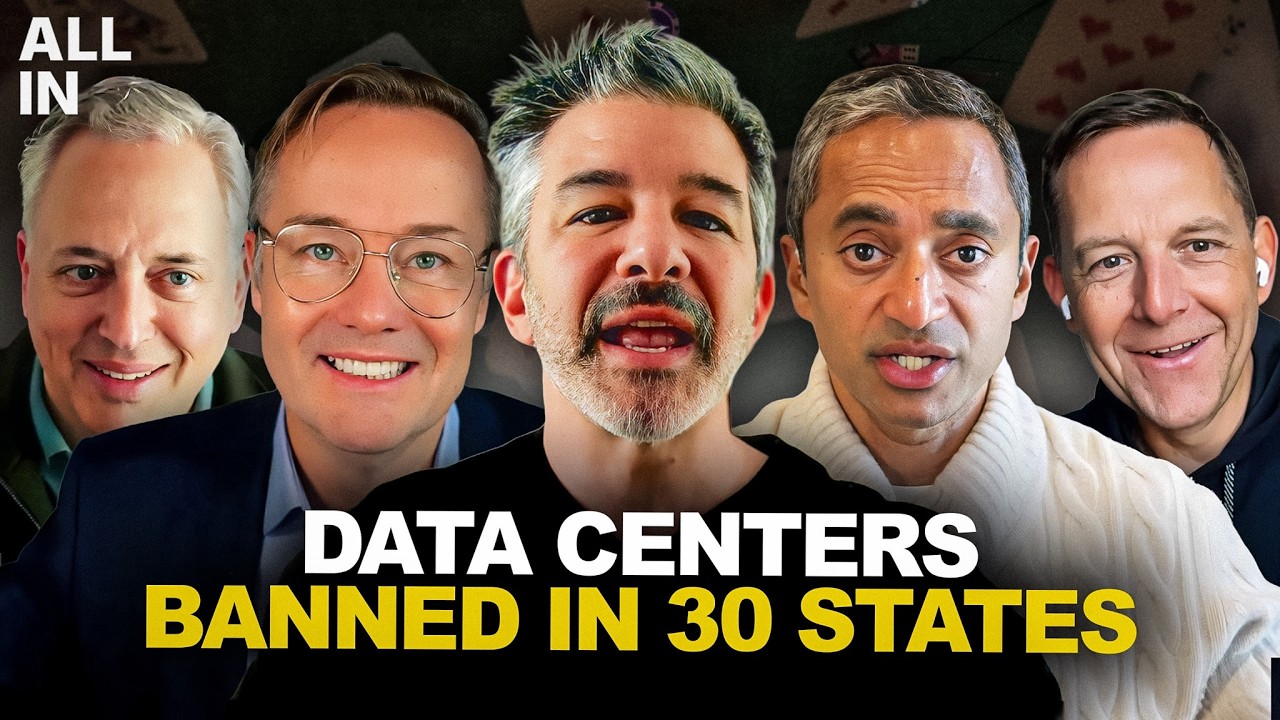
The leak was the curtain-raiser for a week of bruising commentary across Silicon Valley, much of it captured on the All-In podcast. Host Jason Calacanis walked his panel through Dresser's memo before turning to the more uncomfortable financial backdrop: for the first time, Anthropic has been priced higher than OpenAI in secondary markets.

"Secondary markets have now priced Anthropic higher than OpenAI for the first time," Calacanis said. "One investor said OpenAI would need to IPO at a valuation of 1.2 trillion for the last round to make any sense, but there's no buyers currently at the $850 billion valuation that OpenAI just closed."
That comment cuts to the heart of the investor anxiety. OpenAI's most recent primary round priced the company at $850 billion; to earn a return at that entry point, new money effectively needs to underwrite a near-$1.2 trillion IPO. With Anthropic growing faster off a similar revenue base, and secondary desks unable to find buyers at $850 billion, the mathematics is becoming public.
"Growth is king right now in this segment," Kalanick said. "And if Anthropic is growing faster than OpenAI by a significant clip, the investors right now are going to play it forward. You start to get network effects around compute, network effects around the number of tokens you're pushing out for various customers, enterprise or consumer."
The implication was clear: in a business with scale-dependent network effects, being second-fastest is a strategic problem, not just a marketing problem.
The Financial Times followed the Dresser memo with its own report citing anonymous OpenAI investors frustrated with the company's strategic sprawl. "You have ChatGPT, a 1 billion user business growing 50 to 100% a year," one investor is quoted as saying. "What are you doing talking about enterprise and code? It's a deeply unfocused company."
Dresser's memo appeared to answer that criticism by doubling down on enterprise. She confirmed OpenAI was going "hard after business customers" and wanted to win what she called the agent platform layer — the battleground of autonomous coding agents where Anthropic's Claude models have built a visible lead among developers.
Reinforcing that push, OpenAI has quietly poached Peter Steinberger, the architect of the popular open-source project OpenClaw, rather than acquiring his company outright — a move All-In's panel read as a strategic attempt to fold the open-source ecosystem's innovations into OpenAI's commercial stack.
For now, the divergence between primary-round pricing and secondary-market reality is OpenAI's most pressing financial problem. Until that gap closes — either through accelerating revenue growth, an aggressive Spud cycle, or a reset of the primary valuation — every internal memo that leaks will be read as evidence of exactly the identity crisis Dresser was trying to dispel.