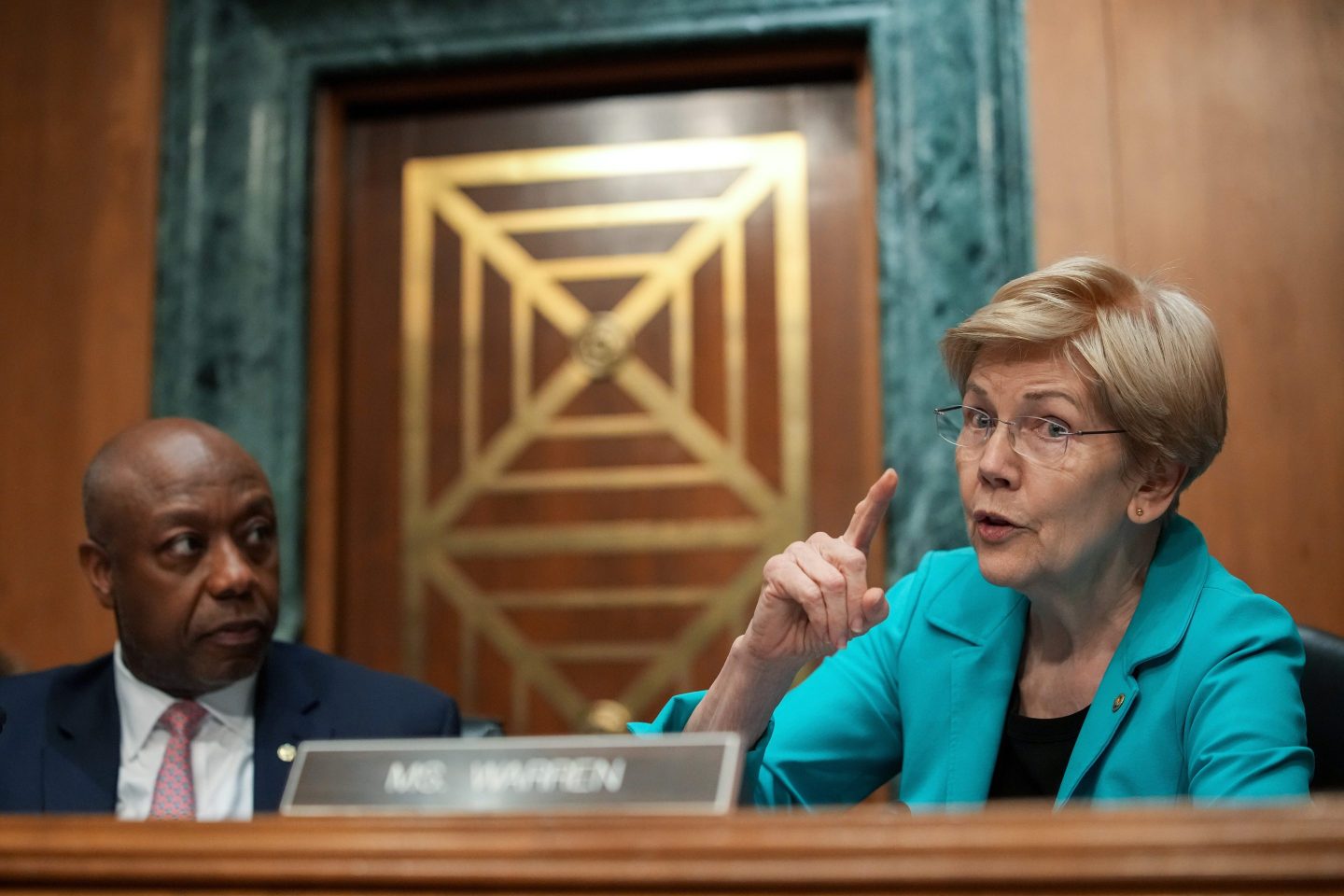
Senator Elizabeth Warren has reopened her long-running fight with Meta on payments, this time with a letter sent directly to Mark Zuckerberg demanding answers about how the company is using stablecoins inside its global platform.
Warren, the ranking Democrat on the Senate Banking Committee, wrote to the Meta chief executive on Wednesday and characterised Meta's level of disclosure to Congress as "troubling". She framed the issue as one of scale rather than novelty, arguing that any payments product riding on Facebook, Instagram and WhatsApp has to be evaluated against the size of Meta's user base, not the size of the pilot.
In the letter, Warren said Meta's stablecoin activity could have "serious implications for competition, privacy, the integrity of our payments system, and financial stability," and warned that lawmakers needed clarity on Meta's plans while crypto regulation is still being written in Washington.

This is not Warren's first run at Meta on this issue. In 2025, she and Senator Richard Blumenthal sent a similar letter raising concerns about Meta's stablecoin ambitions, citing the depegging of Circle's USDC during the Silicon Valley Bank collapse in 2023 as evidence of how quickly a supposedly stable digital dollar can wobble when its bank reserves come under stress. The 2026 letter picks up that thread and presses Meta to explain what has changed since.
Meta's response was unusually direct. The company said in a statement that "we have repeatedly conveyed directly to Sen. Warren that there is no Meta stablecoin," and that it instead wants to enable flexible payment options on its platforms, potentially including third-party stablecoins issued by other firms. Meta confirmed its current pilot is built on Circle's USDC and is being run on Facebook in Colombia and the Philippines, and that users have to manually add an external wallet address for the product to work at all.
That distinction matters for the politics of the fight. If Meta is genuinely a distribution layer for someone else's regulated stablecoin, it sits inside the framework Congress is building under the GENIUS Act and the Clarity Act. If Meta is, as Warren fears, building toward an in-house digital dollar that 3 billion users could carry inside their existing accounts, the conversation is closer to the original Libra and Diem debate that ultimately collapsed under regulatory pressure in 2022.
The timing is also pointed. Warren's letter lands the same week that Mastercard agreed to spend up to US$1.8 billion on BVNK, that Kraken's parent company committed up to US$600 million for stablecoin payments firm Reap, and that bank lobbyists are still trying to claw back yield concessions written into recent stablecoin legislation. Each of those transactions is a sign that regulated incumbents now treat stablecoin payments as a category they have to be inside, not outside.

For Warren, the larger argument is straightforward. A new private payments rail is being built across the most powerful financial and technology firms in the world, and the senator she is most worried about Meta becoming part of that rail is the one with the least amount of public detail attached to its plans. She has not set a public deadline for Meta's response. The company has, in effect, already answered: there is no coin, but there is a pilot, and there is more coming.