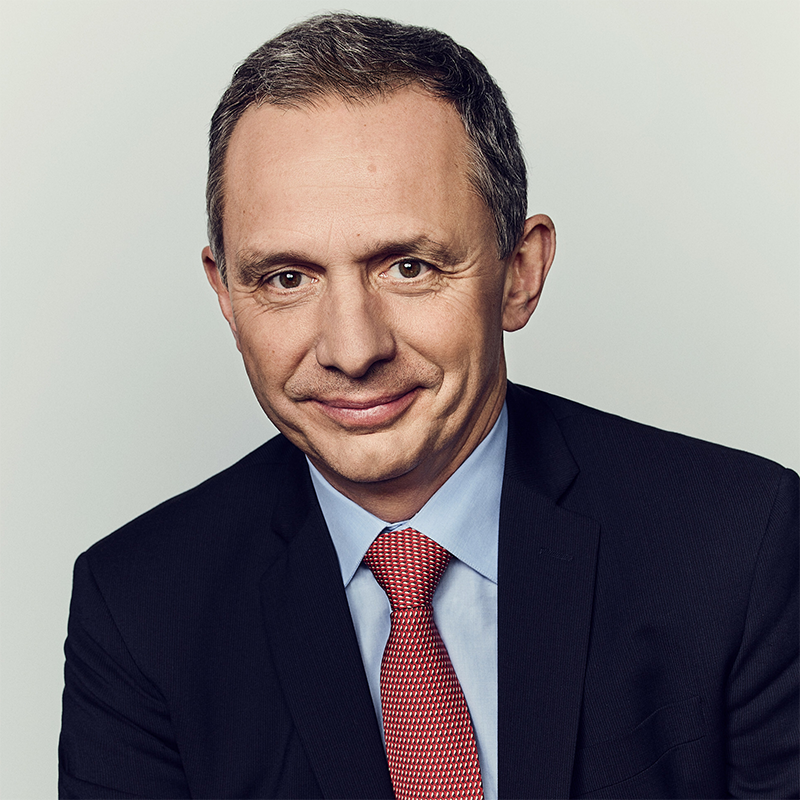
PayPal cleared Q1 2026 estimates on revenue and earnings, but the stock fell 8.93% in premarket trading after new chief executive Enrique Lores used his first earnings call to set out a slow, AI-led modernisation programme, a $1.5 billion gross cost target, and a flat-to-down full-year operating margin.
The headline numbers were good. Adjusted EPS came in at $1.34 against a $1.27 consensus, and revenue of $8.4 billion ran $340 million ahead of the Street's $8.05 billion target on a 7% year-on-year growth rate. The reaction was not.
Shares fell to roughly $45.89 in the premarket and closed Tuesday's session down 9.66%, taking the company's market capitalisation to about $42.2 billion and the stock to roughly 8.6 times 2026 expected earnings. The driver was forward guidance, not the print: PayPal flagged that 2026 adjusted earnings are now expected to range from a low-single-digit decline to a slight increase, with transaction margins flat to slightly down, and Q2 adjusted earnings forecast to fall by a high-single-digit percentage.
Lores, the former HP CEO who replaced Alex Chriss in February after a board reshuffle, opened his prepared remarks with a frank acknowledgement that PayPal had to spend before it could grow.
"Our investment in technology and AI is crucial for improving productivity and accelerating growth," Lores said. "We need to accelerate the modernisation of our technology platform." He framed that work as already underway: "This is a process that has already started. We are gonna be investing in making that happen."
He was also explicit that PayPal had over-rotated to one side of its network. "Strengthening the value we offer to the hundreds of millions of consumers who choose PayPal and Venmo is a key priority," he said. "We have been more focused on the merchant side of the network than on the consumer side, and we need to rebalance that."
Venmo, often dismissed as a peer-to-peer cost centre, was reframed as a growth pillar. "Venmo will be a key component of our growth plans moving forward, supported by its strong brand and younger demographic," Lores said.
The cost story is the one likely to define Lores' tenure. "We expect to see at least $1.5 billion of gross run rate savings over the next 2 to 3 years," he said. "Simplifying the organisation and accelerating the adoption of AI across the company will generate significant savings." PayPal also booked $10 million in CEO transition costs tied to Chriss's exit.
Chief financial officer Jamie Miller took the more cautious tone, which is what investors actually heard. "While first quarter was a solid start to the year, it's early," Miller said. "The macro and geopolitical environment remain complex, and we operate in a dynamic, highly competitive industry."
The market read across all of that as a confession. PayPal is trading at a single-digit forward multiple precisely because branded checkout share has been losing ground to Apple Pay, Shop Pay and Cash App for several quarters, and Lores' answer is two to three years of restructuring and AI deployment rather than a near-term re-acceleration. A $1.5 billion gross savings target is large, but it is also exactly the kind of plan that takes longer than promised and that the market does not pay for in advance.
For now, Lores has bought himself the stock he wanted: a cheaper one, with a forward narrative he controls. The question for the rest of 2026 is whether the modernisation he keeps describing produces visible product launches and Venmo growth before the cost savings have to start showing up in margin.