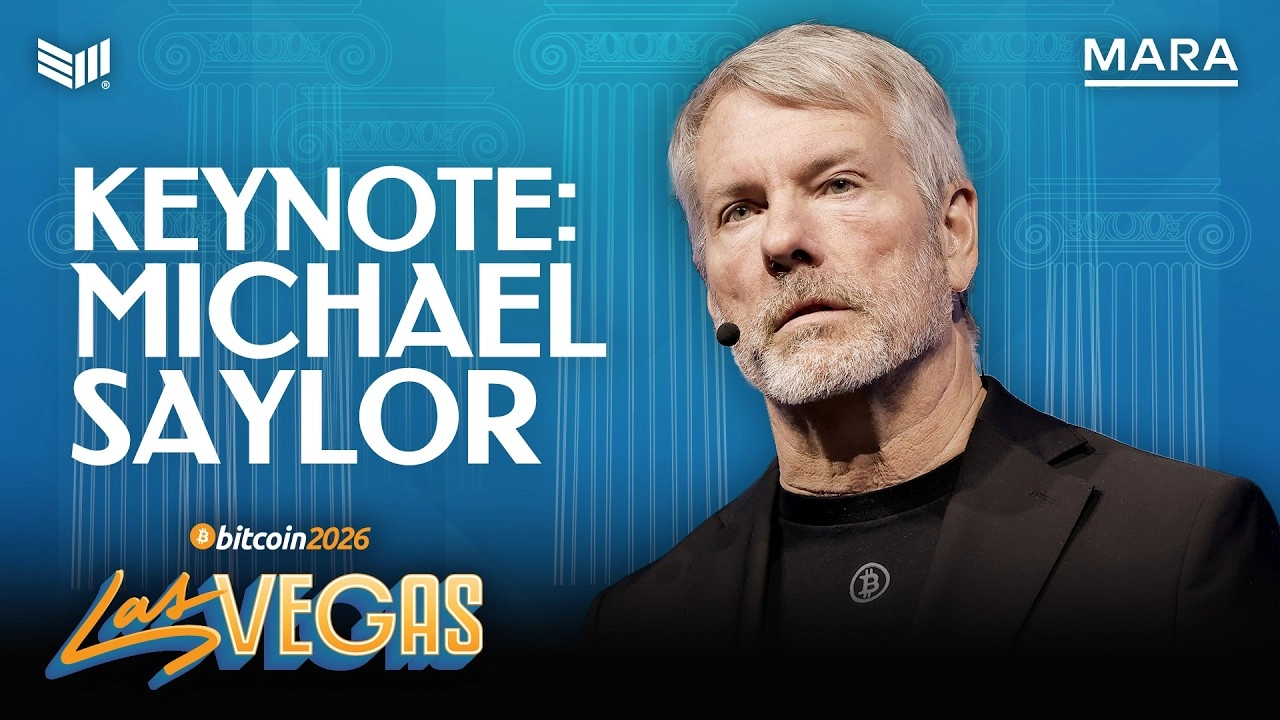
MicroStrategy chairman Michael Saylor used a recent long-form interview to deliver an updated 2026 framework for small Bitcoin holders, arguing that 100 years of roughly 7% annual currency expansion combined with AI's repricing of skilled work is quietly stripping wealth from anyone who holds cash and earns wages instead of owning scarce assets.
The interview was clipped and republished on YouTube under the headline "Important Warning To All Small Bitcoin Investors" and has racked up tens of thousands of views in its first week. Saylor's framing was deliberately blunt.
"The currency supply measured in dollars is continuing to expand, probably expanding 7% a year. It's been expanding about 7% a year for 100 years," Saylor said. "And that currency printing goes to finance wars, foreign wars, trade wars, social programs, government deficits, any kind of political program."

M2 money supply data in the United States does sit close to that long-run rate, and Saylor's point is that the cost is paid invisibly. "It's true that people that don't own assets are suffering from that monetary debasement without realising it for the most part. Government's expensive. It's always very expensive whenever you have political ambitions, and it's got to be paid for either with taxes or with inflation or with some kind of confiscation or regulation."
The more provocative half of the interview was about labour, not money. Saylor argued that AI and robotics are now compressing the value of skilled human work in the same way machines compressed manual labour a century ago.
"You don't really want to make money by being talented and working hard," he said. "That sounds pretty provocative, but the problem is the robots are going to work hard. The cars are going to drive themselves. And once you train the AI on a Shakespearean sonnet, the AI will spit back Shakespearean sonnets just as good as Shakespeare in his prime."
He extended the analogy to white-collar contracts and trust work: "It used to be that being able to compose a 100-page last will and testament was valuable. Maybe that's still valuable for the next five years. But sometime this decade, you're going to say to the AI, hey, just compose an entire network of trust and wills for my entire family and then optimise it for which tax jurisdiction. You tell me. Okay, well, give me 16 of them. Now implement it. And it's all going to happen for ten bucks. And it used to be that I'd cost you 10 million dollars. So human capital is getting demonetised."

That lands him at his familiar destination. "Bitcoin simply represents the highest form of capital that the human race has yet to discover. Bitcoin happens to be the best technology for moving economic energy through space or through time."
Saylor was also asked what could break Bitcoin from the inside, and his answer named protocol creep rather than regulation. "The biggest risk to Bitcoin is bad ideas driving iatrogenic protocol proposals. Don't break the network. Preserve the network, which means defend the network. Keep it secure. Keep it decentralised. Preserve the integrity of the protocol."
For small holders he was less prescriptive than usual, leaning instead on a long-arc test. "If you were in London in the year 1600 and you could own the land in the centre of the city, a building, fine goods, vehicles, currency, or livestock, which of those things would still hold value in 2026? The land. Everything else was made obsolete or rotted or got inflated away."
The argument cuts both ways. Bitcoin's supply schedule is genuinely fixed and verifiable, an advantage gold cannot match. But Bitcoin is fifteen years old, has not lived through a sovereign debt crisis or a forced institutional liquidation cycle, and its track record is almost entirely one of expanding adoption and rising prices. What it does in genuinely adverse conditions at scale, as Saylor concedes only obliquely, is still an open question.