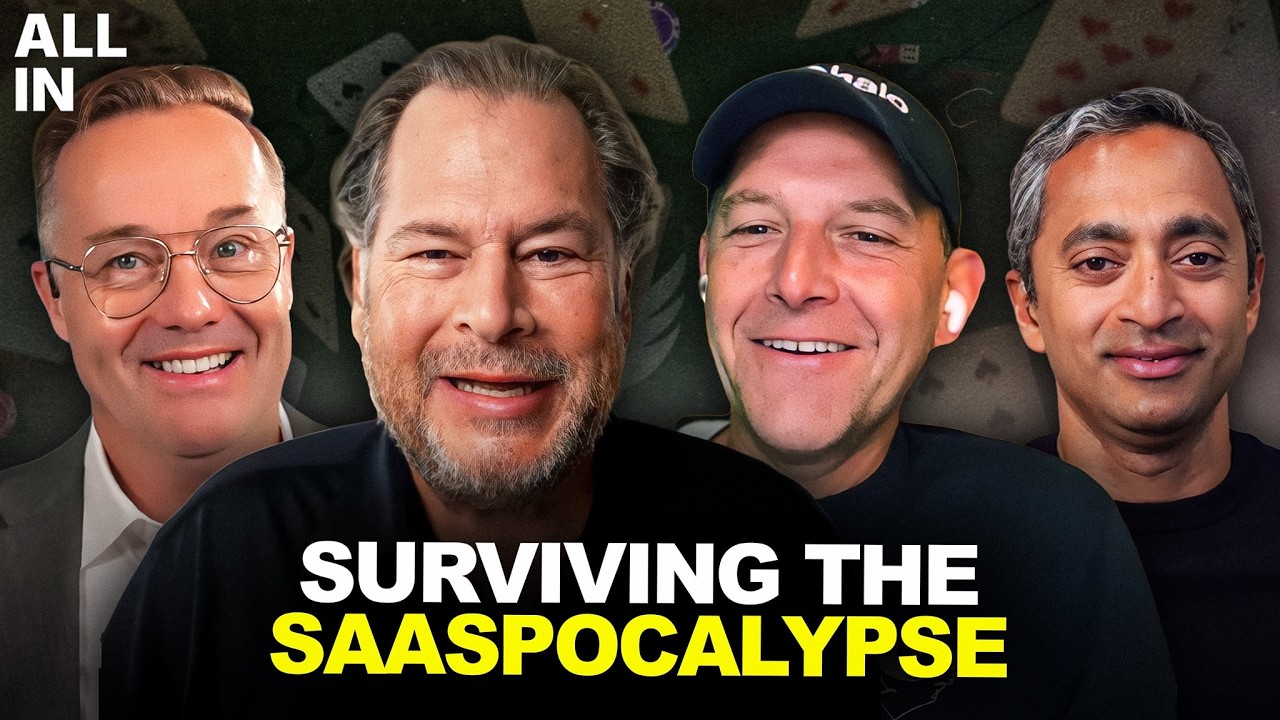
Salesforce chief executive Marc Benioff used a guest spot on this week's All-In Podcast to brush off the rerating of enterprise software as a familiar pattern, telling David Sacks's panel that he has been here before twice and that Salesforce's customer book carries the company through the cycle. Hours after the episode dropped, Bloomberg broke that OpenAI is considering suing Apple over the ChatGPT-Siri integration, sharpening the same AI-versus-incumbents fight Benioff was being asked about.
The SaaS rerating is real. Sacks's framing was that there is "hypnosis around AI" but no underlying numbers showing a software collapse. Benioff agreed that the data does not yet match the narrative.
"This is not my first apocalypse. I mean, I remember the SaaSpocalypse of 2020 when COVID happened and everything collapsed. There was the great SaaSpocalypse in 2016. What's that?"
Asked how he keeps Salesforce's 83,000 employees motivated through the rerating, Benioff turned to the company's actual financials.
"You can't get drunk on the stock price. If you are focused on today all the time and that is how you're getting your emotional state, it's not going to work for you. You have to find a different anchor."
The anchor he pointed to was customer success backed by an unusually clean print. Salesforce will do over $46 billion in revenue this year and more than $16 billion in cash flow.

"I think the low end of the market is basically finished. There is no safe space. I think the high end of the market where Mark operates, where the large monoliths operate, is quite safe and the tell was this week."
The "tell," in his telling, was OpenAI's deployment-company deal, where the AI lab had to put in $4 billion and a guaranteed 17.5 per cent preferred return to stand up what is effectively a competitor to Ernst & Young, Accenture, Deloitte and Cognizant. The terms, Chamath argued, only make sense if the high end of enterprise AI is harder to capture than the marketing slides suggest.
"At the high end of the market where all the action is, what people are finding is, hey, hold on a second. This is a lot harder than we thought. It's not like boop boop boop, put in a prompt and beep boop, it all works. It's not how it works."
That framing rotated the panel into the breaking news of the week. According to Bloomberg, the two-year-old deal under which ChatGPT is integrated into Siri, iOS and macOS has gone so poorly for OpenAI that the company is now weighing a breach-of-contract suit. The complaints, as relayed on air, are that Siri requires users to specifically say "ChatGPT" to get results, that Apple has not promoted the integration, and that the subscription revenue OpenAI expected has not materialised. Apple's counter is that it has concerns about OpenAI's privacy practices and is annoyed that OpenAI is building hardware to compete with Apple after recruiting designer Jony Ive.
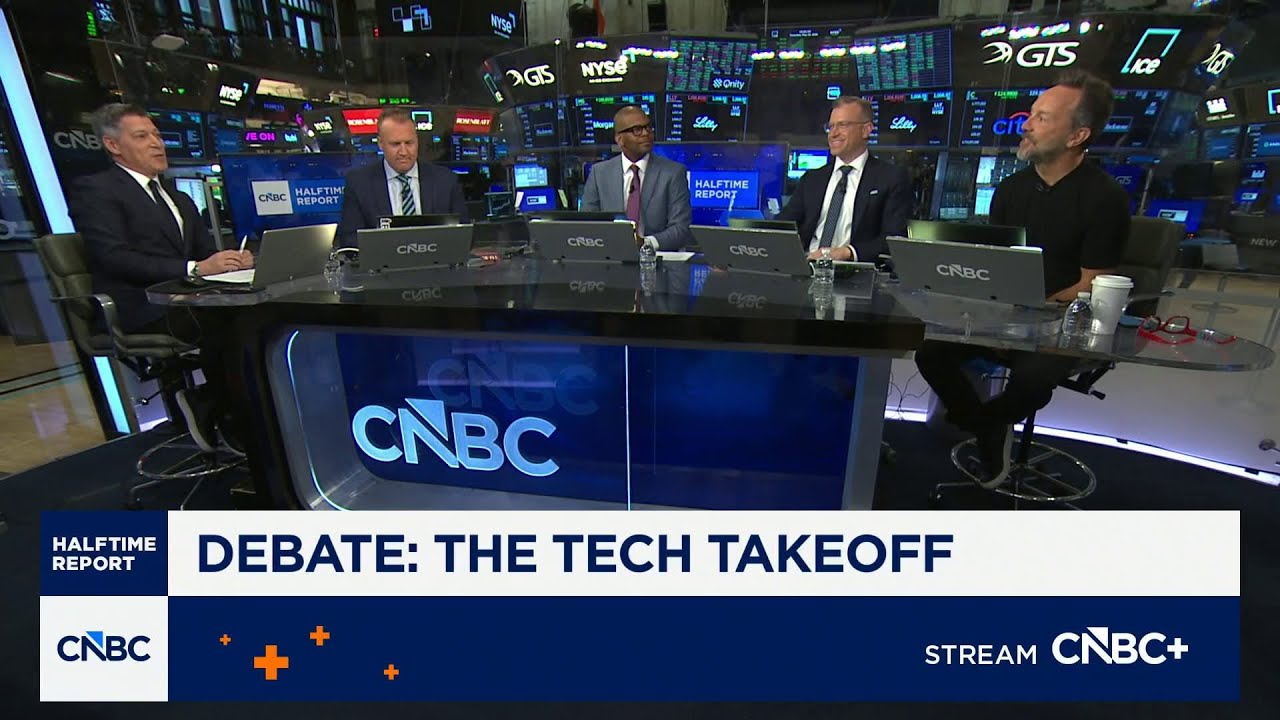
Benioff's reading of how the AI lab race got here was the most quotable read on the panel.
"What happened is we have these LLMs starting to come out. Every company has chosen a slightly different path. You had Elon, he went out, he had Grok and started building these companions and sex bots and all this kind of stuff going on. Then you had OpenAI and they were doing the Sora video thing and they're also doing ad networks. Then you had Gemini and they had the Nano Banana, and finally you've got Anthropic and they go, we don't know about those sex bots and we don't know about Nano Banana, but we're going to do coding agents. And it turned out Anthropic was right."
He described the moment as a wholesale industry pivot.
"Now everybody is like, whoa, where did Anthropic go? Whoa, they're way up there. And then they're all like, we're all going to do coding agents. And now they're all resetting and kind of hitting their buttons and going, coding agents, everybody focus, focus."
"Just this week I called back 50,000 people through agents so I can qualify. I just bought a company called Qualified so I can qualify the agents, call people back, the BDR, the SDR function. I can go outbound. I can do things I could never do before. That is made possible by this AI automation linking it then to the apps."
The combined picture matters for fintech and enterprise investors specifically. Benioff and Chamath agreed the public SaaS multiples are likely overshooting on the downside. They diverged on whether the small and mid-cap names ever recover, with Chamath arguing the bottom of the market is structurally finished and the top survives on customer relationships and net dollar retention. Into that debate the OpenAI-versus-Apple suit lands as the AI-incumbent fight the SaaS rerating has been pricing in for months. The first lawsuit was always going to land somewhere. It now looks set to land on the most valuable consumer hardware franchise on earth.