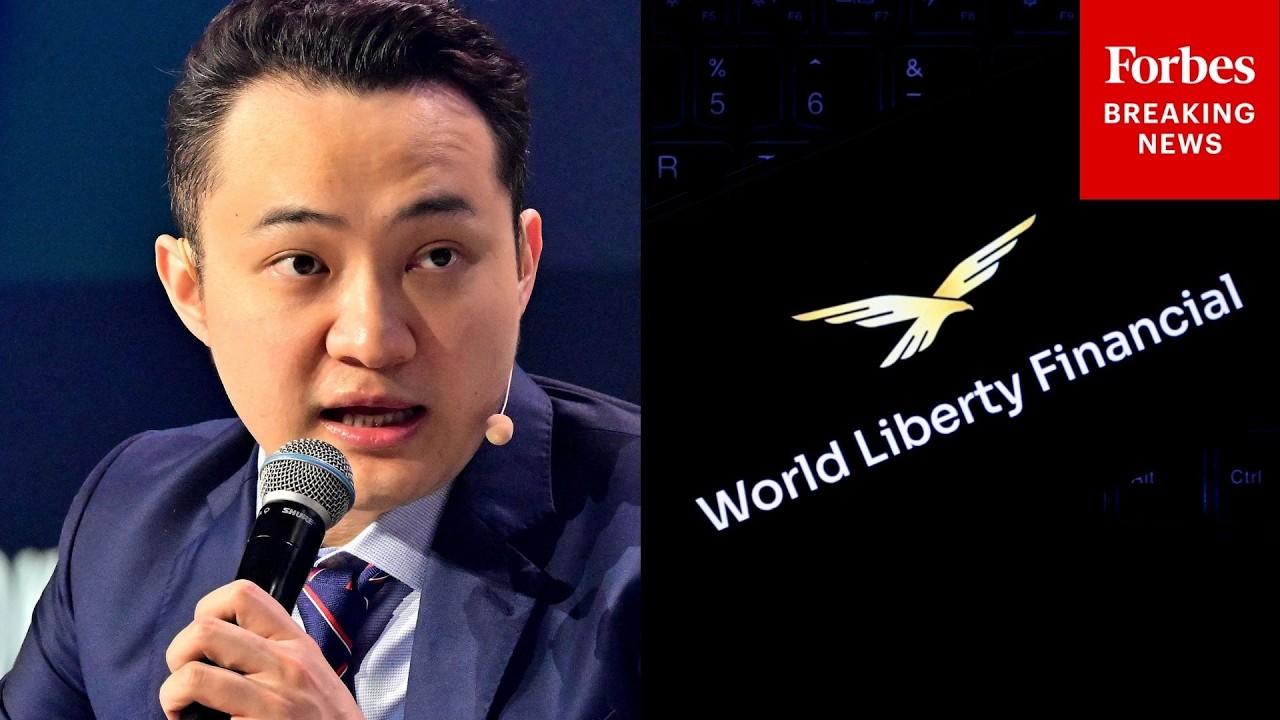
Tron founder and crypto billionaire Justin Sun has filed a federal lawsuit against World Liberty Financial, the decentralised finance venture co-founded by the Trump family, alleging that the project illegally froze approximately seventy-five million dollars worth of WLFI tokens he purchased and accusing its operators of what his complaint describes as criminal extortion. The suit, lodged this week in federal court, is the most consequential legal challenge yet mounted against the Trump-linked crypto business and has rattled a token that was already under pressure from an escalating governance dispute.
The litigation, reported across Reuters, the Wall Street Journal, the New York Times and BBC News, centres on Sun's allegation that WLFI unilaterally revoked access to the tokens he had paid for, excluding him from governance rights he was promised and from any pathway to liquidity. Sun had publicly backed WLFI during its early funding rounds, reportedly investing approximately seventy-five million dollars into token purchases, a commitment that at the time was framed as strategic alignment between Sun's Tron ecosystem and the Trump-affiliated project. The current lawsuit marks a complete breakdown of that relationship.
According to the Wall Street Journal's reporting on the complaint, Sun accuses the defendants of "criminal extortion" — a notably aggressive framing that signals Sun's legal team is not pursuing a standard contract dispute but rather a securities-and-fraud case with potential criminal referral pressure. CBS News and the New York Times reported that the complaint includes fraud allegations tied to the way WLFI tokens were marketed and the way investor rights were subsequently constrained.

World Liberty Financial has pushed back hard. The project's co-founders, in a response covered by DL News, slammed the lawsuit as an attempt by Sun to strong-arm the company and accused Sun himself of "using the Trump brand to profit through fraud." The founders also raised the possibility that Sun's suit is intended to pressure a settlement in the face of alleged WLFI insolvency — a characterisation Sun's team has not publicly confirmed. The dispute has thus moved from behind-the-scenes negotiation into open accusations on both sides, with each camp accusing the other of bad-faith enrichment and fraud.
The backdrop makes the suit politically combustible. President Donald Trump and several of his sons have been publicly associated with World Liberty Financial from its launch, and the project's marketing has leaned heavily on that connection. That positioning, which helped drive the initial capital raise and token demand, now cuts in the other direction — a high-profile crypto billionaire's federal fraud complaint against a Trump-branded financial venture will attract regulatory, political and media attention far beyond what a typical DeFi governance dispute would receive.
The token itself has responded sharply. WLFI had already shed significant value in the weeks leading up to the filing as news of the underlying governance dispute leaked into crypto media — one estimate pegged the drawdown at around seven hundred million dollars of market capitalisation across the feud period. The formal lawsuit adds a durable legal overhang that will weigh on the token until the case is dismissed, settled or adjudicated, a process that will almost certainly extend past any near-term product catalysts WLFI might have.
The case also lands at a moment when the Securities and Exchange Commission under Chair Paul Atkins has pivoted away from enforcement actions against crypto projects. If the SEC declines to open a parallel investigation, Sun will have to carry the fraud case on his own balance sheet through federal civil courts. If the SEC does pick up the matter, the political dimensions expand substantially, given the defendants' proximity to the White House.
For Sun, the suit is both a recovery effort and a reputational bet. He is already one of the most litigated figures in crypto, and his willingness to sue the Trump family's crypto venture signals that the seventy-five million dollar exposure is material enough to justify the blowback. For World Liberty Financial, the complaint arrives at the worst possible moment for a project whose value proposition has always depended on political access and insider credibility.
How this resolves will shape more than one token. It will influence how future political-adjacent crypto projects structure governance, how aggressive token freezes are negotiated, and how much legal protection a high-profile brand connection actually provides when a major investor goes to court.