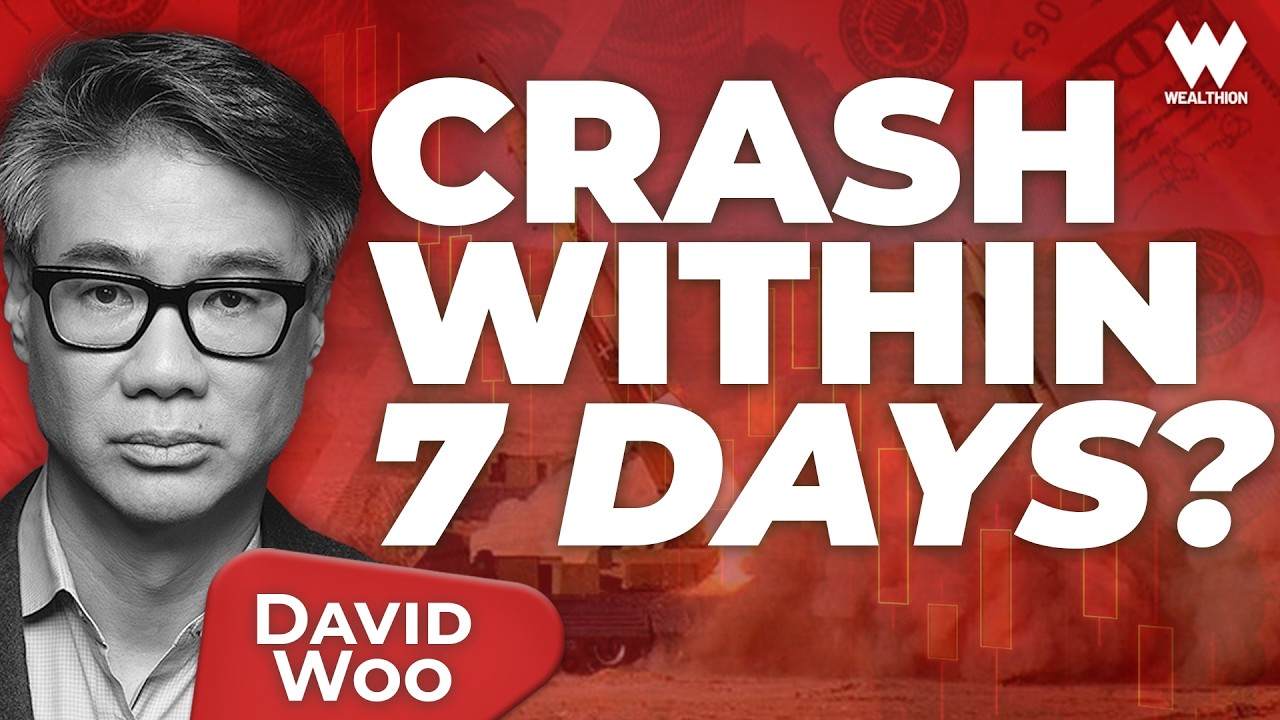
David Woo, CEO of Woo Unbound and a veteran macro strategist, believes Wall Street has fundamentally misread the Iran war rally and is positioned almost exactly the wrong way into the 60-day statutory deadline for US military operations.
"I would argue that we're in a worse situation than we were two weeks ago," Woo told Wealthion host Maggie Lake in an interview published this week. "If you look at Polymarket, it's pricing a 65% chance there will be a permanent peace deal between the US and Iran by the end of May. I mean, to me, that's a laughable notion. Trump is now basically running against the clock."
With the S&P 500 recently touching highs above 7,000 and the Nasdaq on a 14-day rally prior to this week, Woo argued investors are mistaking Trump's messaging for a durable de-escalation. "I've been trying to fight this market for the last two weeks and I'm going to keep fighting it. I do think the day of reckoning is literally around the corner."
Woo's central claim is that the ceasefire of the past two weeks was never a prelude to a deal. "My view all along is that this ceasefire is nothing more than a tactical pause by both sides to buy time to prepare for the real escalation ahead. I never thought that the ceasefire was going to lead to any sort of deal. And this is what we're finding out today."
At the heart of his thesis is a read on China that he says the hedge fund community has got badly wrong. Many of his clients, he explained, have concluded that Trump has a parallel deal with Beijing and that China is now pressuring Iran to stand down. "I personally think that they are drinking Kool-Aid. The only country that has the power to force Iran to stand down to accept Trump's terms is China, but the question is: does China have the incentive to do that right now?"
Woo argued that China's incentive runs the opposite way. "The only reason why Iran is still in this war after 50 days against the combined military might of the US and Israel is because it's getting a lot of help from the Chinese. Today Iran has migrated to the Chinese BeiDou satellite navigation system, which has dramatically improved the accuracy of their missiles and drones." He added that Trump's decision to sign a new military cooperation agreement with Indonesia — which controls the Strait of Malacca — a week before the ceasefire expires was "a very threatening message" to Beijing that would only harden China's position on the Strait of Hormuz.
The pivotal deadline, Woo said, is the War Powers Act. "Today is already April 20th. The war started on February 28th. By next Tuesday this war would have been 60 days, and the War Powers Act says the president will have to basically ask for congressional authorisation of the war if he wants to keep going after 60 days." He noted a Democratic resolution to stop the war was defeated by a single vote in the House last week.
Vice President JD Vance's recent visit to Islamabad, he argued, is the tell. "It's amazing to me that of all people in his cabinet, Trump should decide to send JD Vance, the big isolationist, to Islamabad to meet with the Iranians. What JD Vance said is that our red line is that Iran cannot be allowed to keep the stockpile of enriched uranium. He said that three times on various different interviews. This was a message for his base. If this is the red line for JD Vance, I have to believe it's a red line for the entire White House."
The market implications, he warned, are the opposite of what tape-readers are positioned for. "Trump has mastered not just the art of TACO, real TACO, but also what I call fake TACO. The only way to keep the stock market happy is by convincing the market that he's going to end the war tomorrow. The market is very bad at telling the difference between real TACO versus fake TACO."
Woo said he is short the 30-year Treasury on the view that a renewed oil shock would push yields higher, not lower, before any eventual Federal Reserve response. He drew an explicit parallel with the 1970s. "Are you telling me the Federal Reserve is going to be raising interest rates in the middle of a war? They're going to be blamed immediately as being unpatriotic."
The sequence he laid out for the coming weeks: oil higher, stocks lower, bond yields higher first, then eventually stocks falling far enough that recession fears pull bonds down and force the Fed into a dovish posture. That, he said, is the point at which gold becomes the cleanest trade. "That is a very bullish environment for gold. I think that could be where we are heading towards, but we haven't reached that point yet."
For retail investors, Woo's framing is blunt. The rally is not vindication of the China-deal thesis — it is, in his telling, a market that has confused a tactical pause for a strategic outcome. "I'm right now positioned in a way that's exactly the opposite of the market. I'm one of these people who really believes that you've got to put your money where your mouth is."