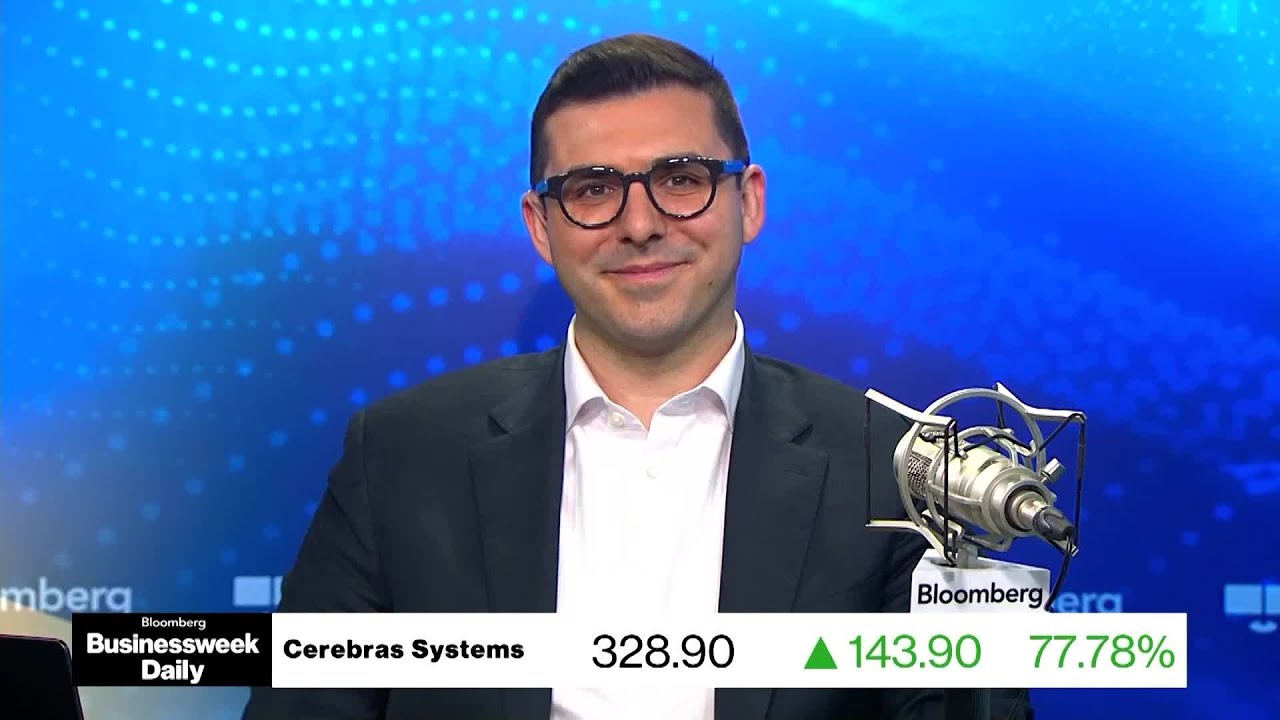
Cerebras Systems shares closed up 68 per cent in their Nasdaq debut on Thursday, lifting the AI chipmaker's market capitalisation close to US$95 billion and minting two new tech billionaires roughly a decade after the company was founded.
Chief executive Andrew Feldman, whose stake in the company is now valued at about US$3.2 billion, and technology chief Sean Lie, whose holding is worth roughly US$1.7 billion, watched the price tape from the Nasdaq MarketSite in New York as the largest US initial public offering of 2026 finally hit the screens. Cerebras had priced the deal at US$185 a share the night before, raising US$5.55 billion, but the order book was so thin on stock that the shares opened far higher before settling into a 68 per cent gain on the day.
Feldman told CNBC's Squawk Box that the float reflected a deliberate decision to use public markets to fund the next phase of growth rather than to cash out early backers. "We have tremendous opportunities for growth, and this was the right way to fund our growth," he said, adding that the company had reached a level of maturity where it "made sense to access the public markets."

The move is a remarkable reversal for a business that withdrew its previous IPO filing only seven months ago and opted instead to raise private capital. As recently as February, investors valued Cerebras at US$23.1 billion. Thursday's close puts the company at more than four times that mark and inside the same league as listed peers Advanced Micro Devices and Micron, both of which have rallied sharply this year on accelerating demand for artificial intelligence chips.
For Silicon Valley's venture capitalists, the listing is a long-awaited liquidity event. Benchmark, which co-led the Series A funding round in 2016, finished the session holding stock worth around US$5.5 billion. Foundation Capital, the other lead in that early round, ended the day on a paper stake of about US$4.8 billion. Cerebras now ranks as the largest US technology IPO of 2026 and one of the largest semiconductor flotations on record.
The debut also reads as a confidence vote on the AI infrastructure cycle. Cerebras designs wafer-scale processors that compete with Nvidia's GPUs on inference workloads, and the company has spent the past year converting that pitch into commercial wins with hyperscalers and sovereign customers in the Middle East. The market is treating Thursday's pop as validation that hyperscaler appetite for non-Nvidia silicon is genuine rather than tactical.
The IPO arrives as a wave of late-stage AI companies test the public markets. Bankers had pointed to Cerebras as the bellwether for the new IPO window, with the size of the deal and the order book quality both watched closely. A 68 per cent first-day pop on a US$5.55 billion deal is the strongest debut for a US semiconductor business in more than a decade and will almost certainly pull forward listing decisions at private AI infrastructure peers still on file.

Feldman, who has been chief executive since founding Cerebras in 2015 with Lie and three other engineers, framed the listing as a starting line rather than a finish. "We have tremendous opportunities for growth," he reiterated. The next test will be whether the operating numbers behind Thursday's market value can keep pace with the share price.