
Bitcoin is showing signs of a fresh institutional bid even after losing nearly half its value since the October 2025 peak, according to VanEck head of digital asset research Matthew Siegel and Tucrum Trading president and chief executive Sal Gilbert, who joined CNBC's ETF Edge this week to walk through the under-the-hood crosscurrents in crypto.
Siegel set out a constructive twelve-month view, telling host Leslie Picker that current sentiment is not pricing in the possibility of a fresh all-time high. "We do think that when we look back on this in 12 months, Bitcoin is likely to reach its all-time high again," he said. "When you look at investor surveys around where folks intend to buy, Bitcoin shows up close to the top of the list."
The most striking soundbite of the segment was Siegel's confirmation of a central bank reserve buyer. "We've had one central bank already this year that has announced that they're going to add Bitcoin to their foreign exchange reserves," he said. "That's a sea change in terms of making this asset a global settlement asset that's used in trade for large-scale cross-border transactions. We think that's a mega trend."

Siegel paired the bullish reserve story with a warning on correlations. "Bitcoin's correlation with the Nasdaq ebbs and flows, and right now it's at close to a 5-year high," he said. "If stocks were to sell off and those correlations hold then any given point a 10% correction in Bitcoin is no big thing." He flagged derivatives positioning as the contrarian tell. "There isn't much optimism in the derivatives markets, futures and options. It still looks to us like this is short covering, and folks are paying a lot for protection. The contrarian take to be that would be the rally continues."
Gilbert reinforced the institutional flows story. "April was the strongest month for crypto ETF inflows in 2026 so far. Spot Bitcoin ETFs pulled in roughly US$2 billion," he said, breaking a six-month outflow streak. "I think the inflows continue. Matthew's exactly right that it's a mega trend. The adoption of crypto in general, the adoption of blockchain architecture into the traditional financial system is accelerating at a pace that people don't understand how big it is and how fast it is."
Gilbert did not declare crypto a bubble. "It's not even close to a bubble," he said. "You have to liken this whole thing to the internet in the '90s, truly. We're in the '90s. We don't really know the technologies that will even come out of the use of the blockchain."
On the long-stalled Clarity Act, Gilbert argued the bill is more accelerant than gatekeeper. "The Clarity Act, whether it passes or not, is just a matter of the speed of institutional adoption in terms of investing in crypto. In terms of institutional adoption of the blockchain, whether the Clarity Act passes, it makes no difference," he said. "That will continue. But a passage of the Clarity Act would be wonderful."
Siegel was less sanguine on altcoins. "The big trend in the markets over the last year plus, at least in crypto land, has been the underperformance of these altcoins like Ethereum, like Solana," he said. He pointed to the firm's NODE ETF as a proof point. "One reason why our On Chain Economy ETF NODE is up 75% since inception while Bitcoin is down 20% is that we've focused on the companies that can actually earn a cash flow from the adoption of blockchain technology." His altcoin warning was direct. "We've been very underweight altcoins within NODE. The investor protections that are still yet to be worked out keep a lot of institutions on the sideline."
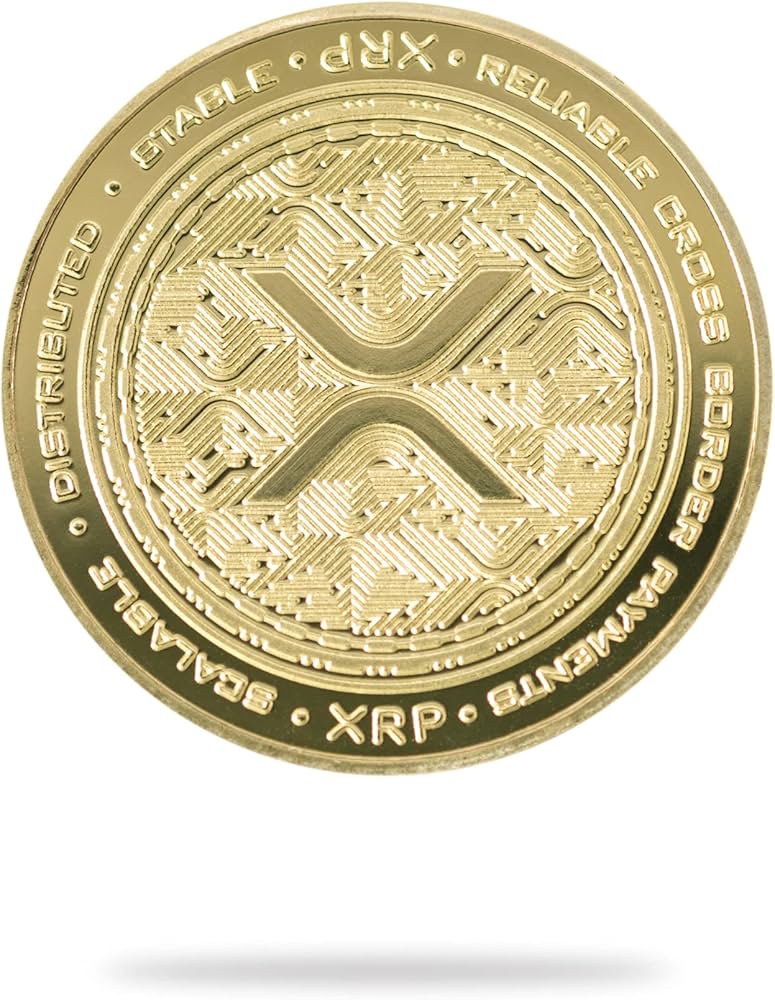
Gilbert defended XRP as one of the few tokens with a clean institutional use case. "It's got a very specific use case. The XRP ledger has a use case. So Ripple, the company, has as its 13- or 14-year mission to move internationally value, and primarily money. Their XRPL chain will be used for that. XRP is a tool on that chain."
The segment closed on Bitcoin's role as a commodity for sanctions-era trade. "Bitcoin is a commodity that you can send to anyone in the world, and you don't need the Strait of Hormuz to be open to do so," Siegel told the panel. "That's why Iran was willing to accept Bitcoin to open the Strait of Hormuz for certain vessels. Part of the reason why Bitcoin's outperformed gold and many other commodities since the war began."
With spot Bitcoin trading just under its 200-day moving average for the first time in seven months and US$2 billion of net inflows snapping a six-month outflow run, the ETF Edge panel's combined message was that allocators are quietly stepping back in even as price action lags.