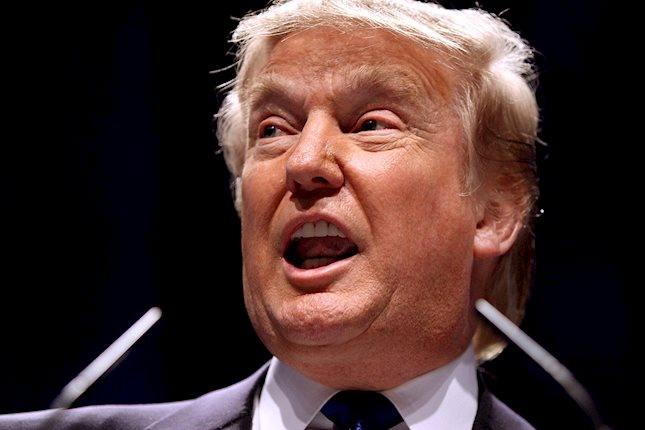
The incoming Trump administration is reportedly planning to designate the Commodity Futures Trading Commission (CFTC) as the primary regulator of cryptocurrency markets, focusing on Bitcoin and Ethereum. This potential shift aims to minimize the role of the Securities and Exchange Commission (SEC) and provide more streamlined guidance on digital assets.
"This plan would reduce the SEC's influence over Bitcoin and Ethereum, allowing the CFTC to see these assets as commodities rather than securities," said a source familiar with the discussions. With Bitcoin and Ethereum commanding a staggering 70% of the global cryptocurrency market, valued around $2.24 trillion, the implications of this change are vast.
"This plan would reduce the SEC's influence over Bitcoin and Ethereum, allowing the CFTC to see these assets as commodities rather than securities,"

Historically, the CFTC has been tasked with overseeing commodities and derivatives, and many in the crypto industry have expressed favorable views regarding its more lenient regulatory approach. Former CFTC Chair Christopher Giancarlo, affectionately known as "Crypto Dad," weighed in on the topic, asserting, "The agency could begin regulating digital commodities immediately with sufficient funding and leadership."
"Crypto Dad,"

Race Results

This strategic push toward the CFTC comes amidst growing criticism of the SEC’s aggressive tactics under outgoing Chair Gary Gensler. Many see Gensler's strict enforcement as a barrier to innovation in the crypto space. "Fostering innovation and reducing regulatory hurdles aligns with Republican priorities," noted an analyst. The anticipated shift could not only unify regulatory efforts but also settle ongoing debates regarding the classification of digital assets.
"Fostering innovation and reducing regulatory hurdles aligns with Republican priorities,"
The friction between the SEC and CFTC has created a complex regulatory environment over the years, with the SEC treating most cryptocurrencies as securities while the CFTC recognizes Bitcoin and Ethereum as commodities. This discord has motivated several crypto businesses to transfer operations abroad, leaving a void in the U.S. market.

In response to these regulatory challenges, bipartisan efforts have emerged, notably the "BRIDGE Digital Assets Act," spearheaded by Congressman John Rose from Tennessee. This legislation seeks to establish a joint advisory committee made up of private-sector representatives to align regulatory policies and alleviate frustrations with the current enforcement-heavy model.
"BRIDGE Digital Assets Act,"
Race Results
CFTC Chair Rostin Behnam has also underscored the need for extensive crypto regulations, having previously expressed the agency's jurisdiction over Ethereum. "We must clarify our stance on digital assets to ensure effective market oversight," Behnam commented. As discussions progress, it is anticipated that disagreements between the two agencies will need to be carefully navigated, especially following the SEC's recent classification of all Proof-of-Stake tokens as securities.
"We must clarify our stance on digital assets to ensure effective market oversight,"

Feedback from the crypto community highlights a general sentiment favoring the CFTC's leadership in regulatory matters. A user noted, "The SEC will no longer be able to strangle the crypto market. The CFTC operates more gently, focusing on institutional players who can handle risks better."
Impact and Legacy
Despite the enthusiasm, potential obstacles are apparent. The CFTC operates with a considerably smaller budget of $400 million and a workforce of 700, starkly contrasting with the SEC’s $2.4 billion budget and 5,300 employees. For the CFTC to effectively manage the complexities of the crypto spot market, a significant boost in resources would be required. Concerns are also being raised regarding the impact on traditional sectors the CFTC already regulates, like agricultural commodities, making legislative backing vital for bipartisan support.
The proposed regulatory transformation could usher in clearer guidelines for both crypto businesses and investors, thereby reducing inter-agency conflicts. If these changes are instituted, the CFTC's new leadership role could represent a pivotal moment for the U.S. cryptocurrency landscape. The combination of the Trump administration's initiative and bipartisan legislative efforts appears set to redefine how digital assets are perceived and regulated, solidifying the CFTC's central role in this evolving market.