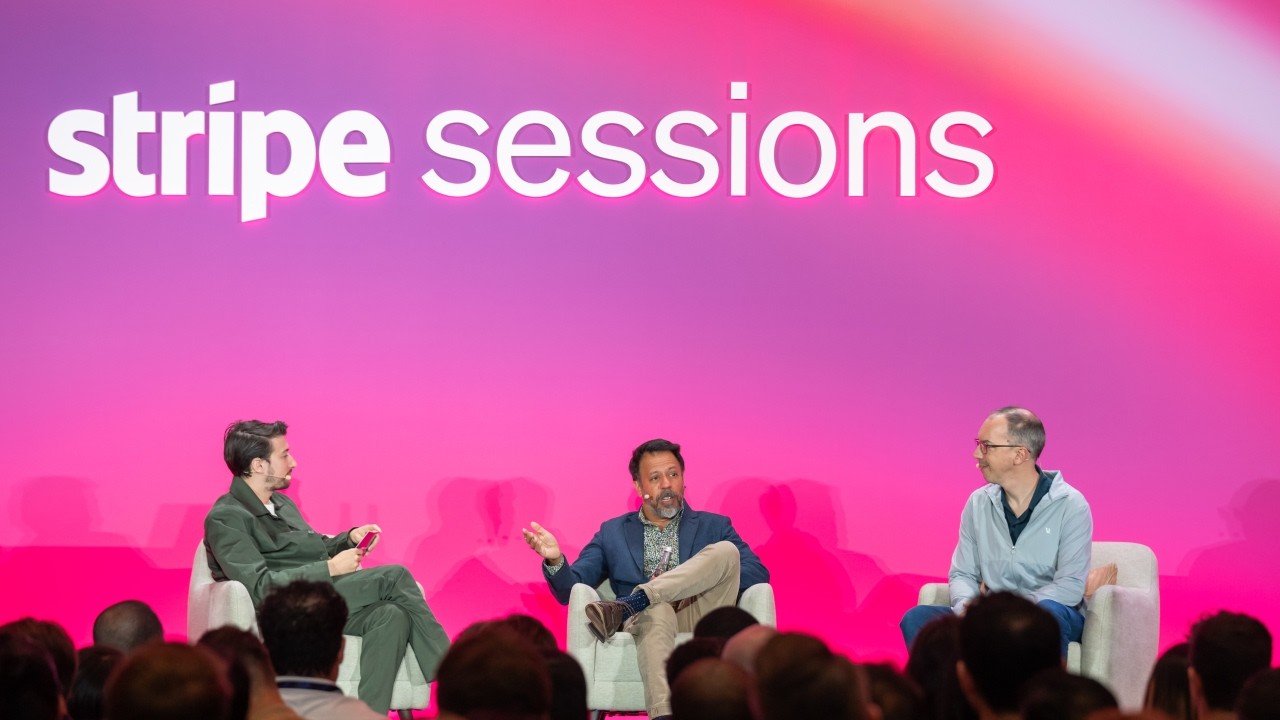
Stripe principal software engineer Steve Kleski used the Stripe Sessions 2026 stage to unveil two new open protocols designed for an economy in which artificial-intelligence agents transact with sellers and with other agents, telling developers the era of agents that just chat is over.
"We've officially moved past the era of AI that just chats, summarises or codes. We're entering the era of AI that works," Kleski said, addressing developers at Moscone Center. "Today, agents are becoming economic actors, autonomous entities capable of building code and navigating real purchases and handling your customer support queue. And for the past year, we've been heads down building all the infrastructure that's going to allow agents to safely move money."
The first protocol, the Universal Commerce Protocol or UCP, replaces an agent's current default behaviour of scraping checkout pages built for humans. "Today, we force them into these pages meant for humans. They're scraping HTML, mimicking clicks, filling out forms," Kleski said, listing the failure modes that follow: agents that cannot certify they are on the right domain, that fail to extract prices, that get blocked by CAPTCHAs and that miss tax and shipping fees.

UCP defines an API contract for the entire checkout lifecycle. "Instead of loading a web page and crawling around it, we should just make a call to create a checkout. Instead of guessing where all the data is on the page, we should just look at a JSON object with line items and tax and shipping and so on," Kleski explained. "And as things update, we make calls to update the cart, get new data back, and then ultimately pay with secure credentials."
The headline guardrail is what Stripe is calling shared payment tokens. In the demo, an agent and a seller each held a Stripe account, and the agent minted a token scoped to a specific merchant, capped at a US$25 limit, and expiring within a month. When Kleski intentionally tried to charge $50 against the same token, Stripe's network rejected the transaction even though the seller had received the token through normal channels. "Stripe still enforced the limits to make sure that what the agent and their human user had agreed upon would be enforced," he said.
The second protocol, the Machine Payments Protocol or MPP, addresses the more novel category of agents paying for digital goods rather than physical ones. "I'm unaware of an agent that needs a t-shirt or anything like that, but certainly agents need things like API calls, access to data, invoking MCP servers, and so on," Kleski said. MPP is built on top of the long-dormant HTTP 402 'payment required' status code, which Kleski's team has effectively resurrected. "It's built on top of the 402 payment-required status code. And in the same flow that the agent is asking for data or asking for information, we can remit payment. So basically, we've swapped out the API key that would typically be there with a payment credential."
Kleski demonstrated the flow with a weather-data API: an agent requests data, the server responds with a 402 challenge, the agent introspects the challenge and remits payment in the same call. Both protocols, he said, support fiat and crypto, with shared payment tokens compatible across cards, buy-now-pay-later networks, Apple Pay, Google Pay and stablecoin wallets.

The technical hurdles being solved are unglamorous but consequential. Agents are non-deterministic by design, Kleski noted, which is a feature when they are exploring alternatives or hunting for products but a serious liability the moment they shift from browsing to buying. "In commerce, creativity can be a liability. You can't have a hallucinated credit card number or shipping address or spend funds that it shouldn't authorise," he said.
The pitch to developers was unambiguous. The technical standards an agent-native economy will run on are emerging now, and Stripe wants its rails to be the default. UCP and MPP, alongside Stripe's broader agentic commerce suite, are the company's attempt to make sure the rules of the road for AI-driven payments are written in San Francisco rather than retrofitted around the failure modes of a different era of e-commerce.