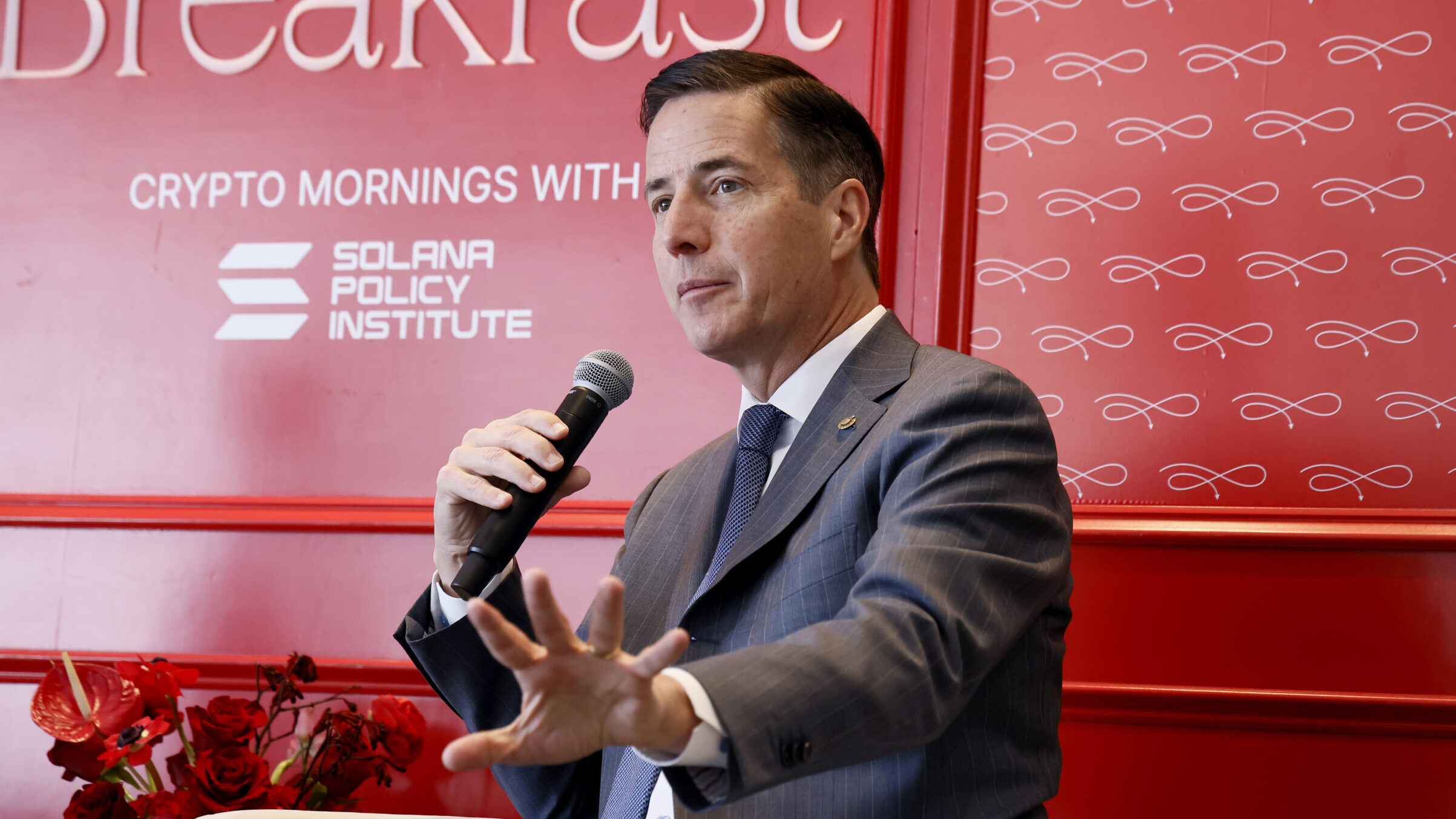
Solana Policy Institute representative Miller Whitehouse, interviewed by host Paul Barron at the Solana Accelerate event in Miami, said the Clarity Act is now on a tight legislative window that could see Senate Banking Committee markup as early as next Wednesday and a full Senate vote in June.
The Clarity Act, the working title for the Senate side of the digital asset market structure bill, is the legislative vehicle the industry has spent the past 18 months trying to land before the August recess. Whitehouse, who joined the Solana Policy Institute after a stint working on policy in Washington, said the markup window is the next critical inflection point.
"There's been a lot of positive developments since the early January speed bump. I think the yield rewards issue, which you've covered extensively and has been getting a lot of love, has been positively resolved. I think the core pieces of the bill that are most important to crypto, developer protections, clearly defining where which agency has authority over you, remains at the center of the bill," Whitehouse said.

He said the timing was confirmed in a fresh interview with a senior Senate ally. "I just interviewed Senator Bernie Moreno who's a big crypto advocate and he said that it's going to mark up next Wednesday. So fingers crossed that that is true and we could get it to the floor in June and hopefully enacted before August," Whitehouse said.
Whitehouse walked Barron's audience through the legislative steps. The Clarity Act would first move through the Senate Banking Committee, where roughly 20 senators amend the proposed text in markup before voting on whether to refer the bill to the floor. "Once it goes from the Senate Banking Committee, they can positively refer it to the full Senate and then all 100 senators will be able to vote on it and get it done hopefully," he said.
He was candid about the residual risk. Banks, in particular the lobbying coalition that has spent the past quarter trying to alter the stablecoin yield rules, have continued to test the language. "This morning I see a little bit of activity on social talking about that the banks are trying to maybe finagle in another move. Tom Tillis is coming in saying no, no, no, we've got this in play," Whitehouse said. "It pays to be paranoid in this town or at least the town of Washington. So certainly yes, who knows? Anything in the world could happen and if it affects national politics, it now affects the prospects of the bill. That's just the nature of legislating."
The Solana Policy Institute is one of three main industry-side groups working the Clarity Act. Whitehouse said the institute has spent its lobbying effort on protecting developer immunity and clarifying which agency, the SEC or the CFTC, has primary authority over different on-chain activities. Both have been the most contested issues among traditional finance lobbies.

The markup timeline is the most concrete legislative signpost the industry has had since Coinbase chief legal officer Paul Grewal's public letter accusing banks of "snatching defeat" earlier this week. If markup lands next Wednesday and the Banking Committee positively refers the bill, the path to a June floor vote and a possible enactment before August is mechanically achievable, although the chamber's schedule remains tight given competing priorities around appropriations and the debt ceiling.
For Solana, the stakes are unusually concrete. The yield rewards resolution removes a structural overhang on staking-based yield products, which have been the single largest commercial bridge between Solana validator economics and onshore retail platforms. Clarity Act enactment would also remove the principal regulatory risk to the network's institutional roadmap, including the ETF staking discussions that have moved through the SEC's no-action queue over the past quarter.