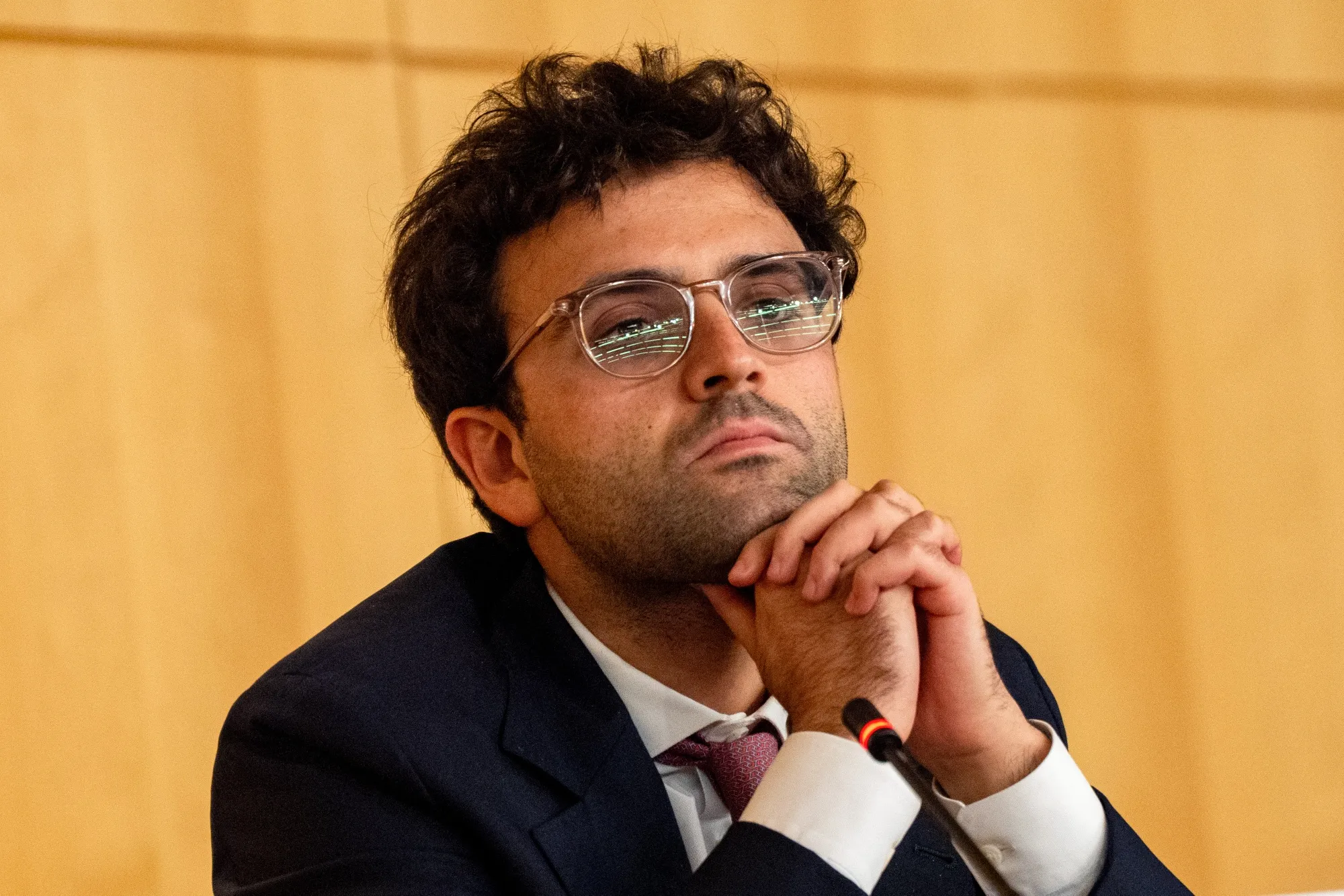
Kalshi co-founder and chief executive Tarek Mansour has been added to the speaker roster at the Bitcoin 2026 conference in Las Vegas, placing one of the fastest-growing regulated exchanges in American finance alongside the industry's core crypto lineup.
Mansour is scheduled for a fireside chat on the Nakamoto Stage at The Venetian Resort on April 27 at 11:40 a.m., in conversation with BTC Inc chief executive Brandon Green. The booking was announced on April 21, six days before the conference opens.
The appearance marks the clearest signal yet that prediction markets, Bitcoin and the broader move to bring financial speculation on-chain are converging in front of the same audience. Kalshi already allows users to deposit Bitcoin to fund event contracts, and the infrastructure integration is a core part of what Mansour and Green are expected to discuss, alongside how prediction markets reshape how retail and institutional participants price information and risk.

Kalshi's scale has changed dramatically since it was founded in 2018 as a platform for trading on real-world events — elections, economic data, sports outcomes, corporate actions and weather — through what it calls event contracts. Trading volume has climbed from roughly $300 million annually to an anticipated $50 billion, according to the Bitcoin 2026 listing, a jump that puts it among the most consequential new exchanges built under federal regulation this decade.
The company's balance sheet has kept pace with the volume. Kalshi accepted $300 million at a $5 billion valuation from investors including Sequoia Capital and Andreessen Horowitz, capital that both funds described as a bet on event contracts becoming an enduring asset class rather than a seasonal trade around US elections.
Mansour's resume is one of the unusual ones for a fintech founder speaking at a Bitcoin conference. Before co-founding Kalshi with Luana Lopes Lara, he traded quantitatively at Goldman Sachs and Citadel, and holds degrees in computer science and mathematics from MIT plus a master of engineering from the same institution. That background — quant strategies from two of the most data-intensive trading desks on Wall Street — is part of why Kalshi's pitch lands differently inside institutional conversations than it does on social feeds.
The fireside chat is expected to cover both the regulatory mechanics that let Kalshi operate inside the US and the strategic case for Bitcoin as a settlement asset on a regulated exchange. It is also likely to address the recent Bernstein projection, circulating widely since the start of the year, that prediction markets could reach $1 trillion in annual volume by 2030 if firms such as Robinhood and Coinbase continue to integrate event contracts into their product stacks.
Bitcoin 2026 runs April 27 to April 29 at The Venetian and is the industry's largest single gathering. The conference programme sits at the intersection of macro, technology and regulation — a combination that Kalshi, as a CFTC-facing exchange with a crypto-native deposit rail, is now commercially incentivised to occupy.
For Mansour, the event is also a platform moment. Kalshi's reception among Bitcoin holders will help determine how quickly the platform can expand its user base into the one demographic most comfortable with regulated-but-crypto-adjacent products. A strong performance in Las Vegas next week could accelerate that adoption curve just as the platform's volume chart inflects.