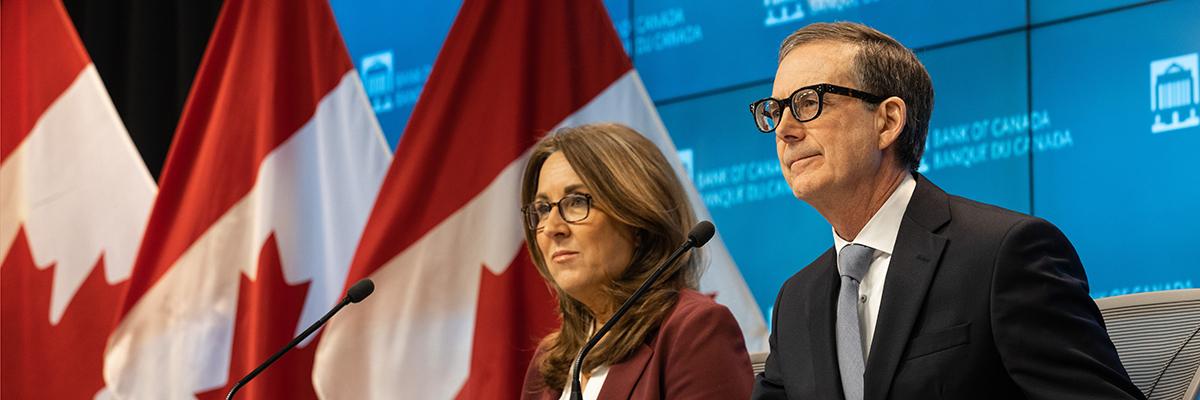
In a notable accomplishment, the Bank of Canada achieved its inflation target of 2% in 2024. This significant milestone was reached amid easing inflationary pressures and the presence of excess capacity in the economy. "By June, we felt it was necessary to start lowering our policy interest rate, and we followed up with four additional reductions, bringing the rate down to 3.25% by year’s end," said a spokesperson from the Bank.
The Bank of Canada's efforts were effective as consumer price index (CPI) inflation experienced a steady decrease, dipping from 2.9% in January to 1.8% in December. "We observed not just a decline in inflation rates, but a shift wherein inflation was no longer broadly based. This showed promising signs that inflation expectations and corporate pricing behaviors were returning to normal," noted the spokesperson.
Throughout 2024, growth in Canada’s real gross domestic product (GDP) remained modest, hampered by the residual effects of previous monetary policy adjustments. Although wage growth was high, the labor market experienced a noticeable easement. The organization recognized that although elevated wages prevailed, they began to stabilize.


"Understanding the dynamics of inflation is crucial in informing our monetary policy decisions," said a policy analyst. The Bank utilized timely and extensive information regarding both the Canadian and global economies to stay informed. This ongoing monitoring of inflation trends and GDP growth allowed them to assess the right timing and size for interest rate cuts.
"Understanding the dynamics of inflation is crucial in informing our monetary policy decisions,"

In the first half of the year, CPI inflation relieved itself from exceeding 3%, with reductions in goods inflation being a significant factor. Nevertheless, inflation pressures remained strong and somewhat widespread, particularly in shelter inflation, which was still high. "As we approached October, we noted that the inflationary pressures were becoming less diverse, with the majority of CPI components growing below 3%. This was a turning point for us," added the analyst.

Career Journey
Career Journey

Career Journey
Confidence in the Bank’s direction grew as late 2024 surveys indicated expectations of inflation settling between 2% and 3%. The share of CPI components escalating above 3% was clearly normalizing, reflecting a positive trend in consumer expectations.
"We saw a strengthening in GDP growth over the year, but this growth was not uniform across sectors," remarked an economic expert. The principal drivers of GDP growth included consumer spending and government expenditure, while segments sensitive to interest rates, such as housing and business investments, struggled. Even with rising populations supporting spending, consumption per capita remained lackluster in 2024.
"We saw a strengthening in GDP growth over the year, but this growth was not uniform across sectors,"
Restrained economic activity was partly attributed to the continued repercussions of prior monetary tightening. Employment among youth and newcomers particularly illustrated signs of slack as the overall labor market softened. By year’s end, signs indicated the economy was in excess supply.
Impact and Legacy
Impact and Legacy
"Despite these challenges, we began to see improvements in the latter half of 2024, especially in housing and purchases of larger items. This was a direct reflection of the initial impacts of our policy rate reductions," said the economic analyst.
Another critical aspect of the Bank's strategy involved normalizing its balance sheet through quantitative tightening. The Bank was successful in reducing its balance sheet from $316.8 billion at the end of 2023 to $277.2 billion by the end of 2024. "Through our communications in March, we laid out our plans on when we anticipate quantitative tightening would conclude and how we would manage assets thereafter," said a representative from the Bank.
"Through our communications in March, we laid out our plans on when we anticipate quantitative tightening would conclude and how we would manage assets thereafter,"
The Bank of Canada continues to play a vital role in overseeing the nation's economic health. As it navigates financial challenges while aiming for stability, all eyes remain on its monetary policy moves in 2025 and beyond. As inflation expectations stabilize and the economy shows signs of recovery, the Bank is poised to implement further actions to ensure that the target for consumer price index (CPI) inflation is maintained.